The school official at Teaneck High School eyed me with suspicion as I entered the building, barely on time (just like in my youth), and offered up my SAT admissions ticket. In Nutley, the ACT proctor had been much warmer, amused by my presence. And, indeed, the ACT was the friendlier of the two tests.
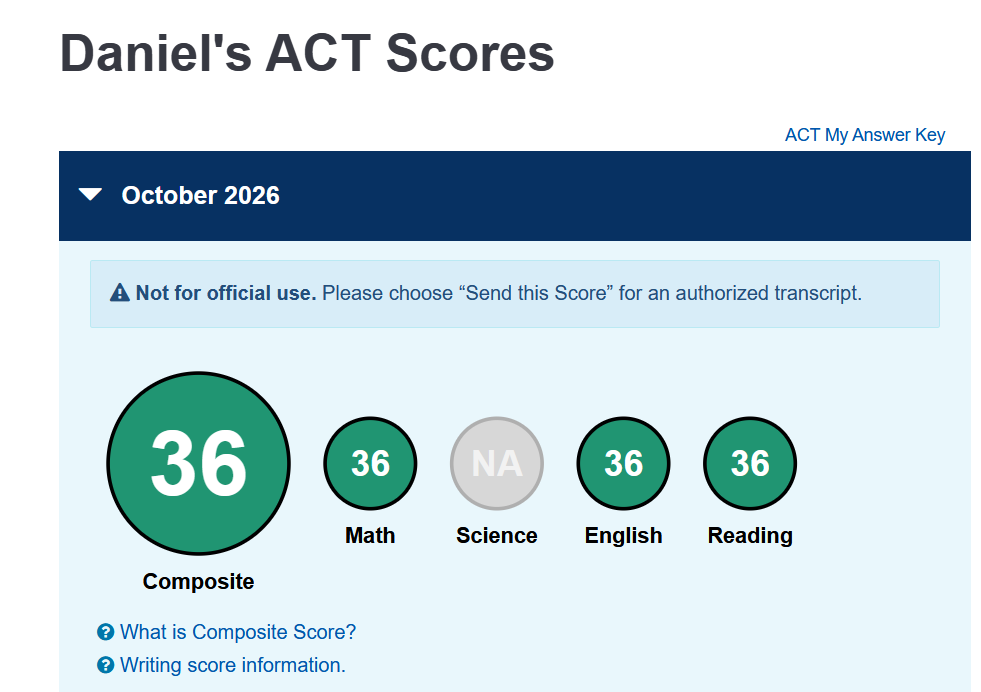
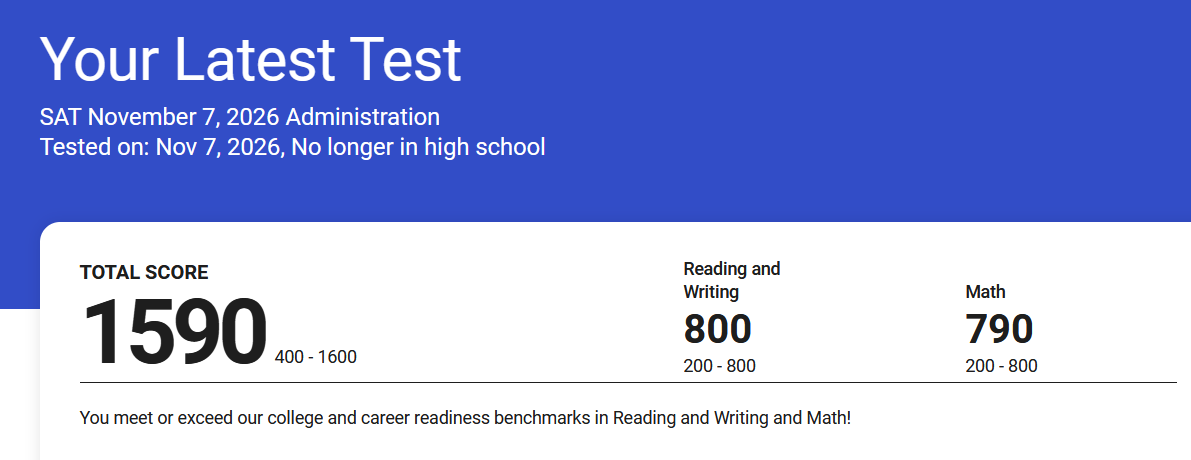
I’ve helped many hundreds of students prepare for both tests over my 17-year test prep career, but until now, I’ve relied on practice tests to stay up to date with changes in the test format and question types. This fall, I sat for both tests for the first time in years. I scored a 36 on the ACT and a 1590 on the SAT, and the experience confirmed my view that the SAT is a different beast from the ACT.
The ACT was predictable. The degree of difficulty of any single item was never extreme, although some of the math and reading questions required careful attention. The test reflects the method used to create it–the ACT asks college instructors what skills students will need to succeed in their classes, and the purpose of the test is to demonstrate mastery of those skills.
And, perhaps surprisingly, the infamous “speededness” of the ACT is not as scary as its reputation. This is partly due to the changes made to the Enhanced ACT–fewer questions and more time per question.
The SAT is another story. I can still hear it panting behind me, its jaws snapping at my heels as it drove me into the dreaded thicket of “Problems 7-14 on RW Module 2.” Yikes!
In my years advising families on which test to take, I’ve found the ACT easier and easier to recommend. Consider the following.
1) Schools don’t discriminate between the two tests.
I’ve had recent ACT students accepted at Columbia, Cornell, and NYU Stern–and had one ACT student receive a $150k scholarship to the University of Florida. In their own words:
- Yale: “does not prefer scores from one exam over the other.”
- Penn: “No preference is given to the SAT or the ACT.”
- University of Georgia: “UGA has no preference between the SAT and ACT.”
2) You can superscore across three sections on the ACT, compared to two on the SAT.
This increases your ability to leverage superscores across multiple sittings.
3) The English and Reading sections are notably more straightforward.
They are more skills-based than the SAT’s Reading and Writing section, in particular Module 2. And the vocabulary required is less challenging. This is a standard view among professional tutors.
So, is your student better suited to the ACT or the SAT? That still depends on your student, naturally! There are situations in which I may urge the SAT.
But I can tell you from my own experience–if I had to go back to high school and do it again, I’d favor the ACT.
That’s one reason I’m expanding my ACT classes to two twice-weekly groups:
- Sunday-Tuesday, 7:30–9:00 pm. Sign up here: Sunday/Tuesday Winter ACT Class
- Monday-Wednesday, 7:30–9:00 pm. Sign up here: Monday/Wednesday Winter ACT Class
Classes begin the week following the December 12/13th ACT exam and run for 20 sessions leading up to the February 27/28th test.
Book a free strategy call with me to see if my class is a good fit for your teen. I’ll be glad to go into more detail.
Happy prepping,
Daniel Burke